


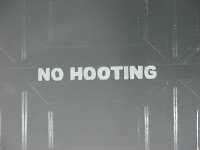
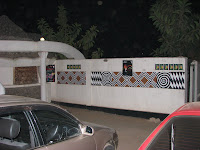
Noni's apartment complex had a gate and a guard like most places in Nairobi. This sign was on the gate. I learned this meant no honking to get the guard to open the gate.
 Here is Noni, her mom, and her dad in their apartment. They were excellent hosts; very generous and kind. I hope to return the favor when they come to Washington DC sometime!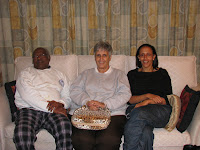

 After dinner Noni and a friend of hers took me to Mercury bar. It was great to be in a modern lounge listening to music and watching people mingle.
  The next day we started out with breakfast at Java House, which is a large coffee house chain in Nairobi. I loved the fancy coffees and yummy food. I took this picture from the balcony.
 I caught Noni sitting pensively at the table.
 After breakfast we walked around a mall called the Junction. I bought a number of goodies at the Nakumatt which is a large grocery/home goods store a little like a Walmart.
 Although I didn't get to visit any of the famous game parks in Kenya on this trip, later in the day we visited a giraffe center where we were able to feed the animals.
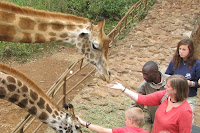 We saw their slimy tongues eating the hay out of our hands.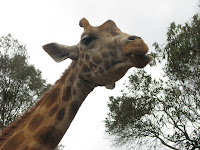
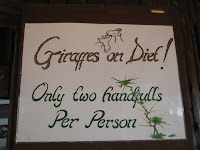
 Two of the giraffe's were named Laura and Lucy.
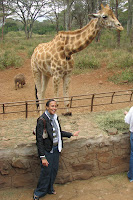 There was a "zoovenir" shop on site, and I posed with the Maasai warriors. One of them was looking at me! I learned the Masaai are an indigenous tribe in Kenya and Tanzania. They were warriors and one of the most well known groups in Africa. Over the weekend there were many opportunities to buy Masaai blankets, shields, masks, and these statues.
 After the giraffe center we went to Karen Blixen's house and museum (the author of the memoir "Out of Africa"). I saw the movie a long time ago, and touring her house was an interesting reminder of her story. She owned over 6,000 acres of land in the early 1900s where she unsuccessfully tried to grow coffee and successfully wrote many novels. The official guided tour talked about her as a brave woman who came alone to Africa to get married and that she employed hundreds of people and made sure they finished school and had other opportunities. We had some of our own discussions of how the other story told is that she may not have treated the locals so well, and she may or may not have actually bought the land. The good and bad impact of colonialism was an ongoing theme in our discussions over the weekend, as it often is when traveling around Africa.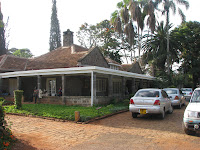
 There were many gardens surrounding the homes she owned on this land. We had lunch in one of the gardens at a very pretty cafe. There were weddings in the gardens when we visited her house.
 This is The Karen Hospital- a private health facility near her land. The neighborhood is named Karen and seems to be a very upscale area.
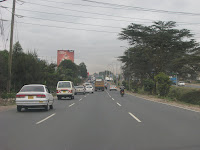
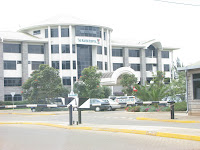 As we drove around Nairobi on busy crowded streets, seeing a herd of cows crossing the road was a common site.
 I liked this sign advertising a hair salon, a wonderful pub and butchery and place to eat grilled meat.
 This was a roadside fruit and vegetable market; also a common site.
 On Sunday we visited the Masaai market outside of the YaYa mall. Noni negotiated the price of two scarves for herself and a colorful Masaai blanket for me. I also bought a beaded necklace, a beaded belt, and African Obama fabric.
 We indulged ourselves while in the big city for the weekend, including getting our hair done.
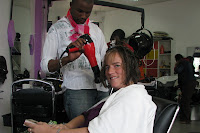 Fun at the salon!
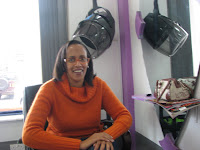 On Saturday night we ate at a sushi restaurant.
 On Sunday we saw the movie "The Proposal" and then returned to Java House to meet up with Noni's friends.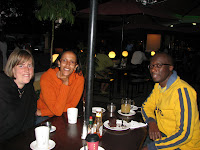
I enjoyed visiting where Noni grew up. She pointed out her primary and secondary schools and her old hangouts. Nairobi is a fascinating mix of modern ammenities like movies, malls, bars, and a variety of cuisines; along with rural Africa characteristics like cows and goats everywhere, everything for sale at the side of the road, poverty, and general hard lifestyle.
I never felt unsafe over the weekend but we knew that car jackings and other crimes are common in Nairobi. We were careful not to drive far at night and in general people advise against driving alone at night. Most places we went were guarded with gates and guns. I liked Nairobi very much and could imagine it would be a very interesting place to live. The people were very friendly and learning Swahili greetings was fun. Though I think the crime, traffic, and energy shortages would be challenging to deal with as a resident.

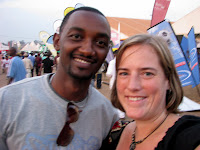


 We ordered a table full of pork and goat nyama chomo!
 I couldn't resist capturing the hanging meat on film. (Sorry vegetarians!)
 One of our team members, Steve, organized the gathering for Noni. He even called ahead to make sure they had enough pork for 20 people and that it would be slow roasted before we arrived!
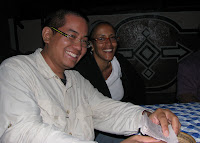 One of the managers offered to be a photographer for me. This place has great service, a lively ambiance, and the food is delicious.


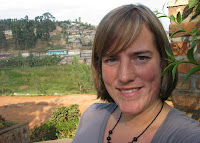 I returned to Kigali to continue working through the end of September. The work is challenging as usual, but I feel different because there is a light at the end of the tunnel and I know the last couple months will fly-by.
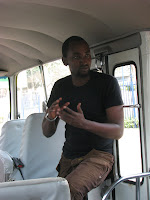
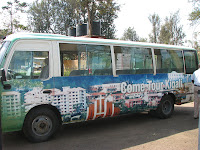 Our driver, Tim, was pretty good at reciting stories and facts about Kigali sites.
 First we stopped at the Genocide Memorial of Belgian Soldiers at Camp Kigali. This is the location of the massacre of 10 Belgian UN Blue Berets which happened on the first day of the genocide. Under the command of Canadian General Romeo Dallaire, they were deployed to guard the house of moderate Prime Minister Agatha Uwilingimana when soldiers invaded the home and transported them to this location where they were killed.
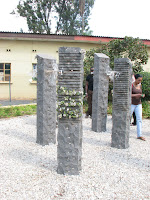 The building is a disturbing reminder of the weapons and violence.
 Next we traveled to the Kigali Memorial Centre(Gisozi), which is a very well-done museum about Rwanda's past, present, and future related to the genocide in 1994. The exhibit includes 2,500 personal interviews, 25,000 personal profiles of missing victims recorded, and over 2,000 photographs of victims.
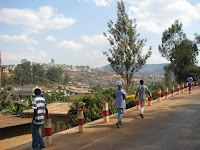
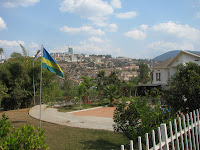 There is a really beautiful view of Kigali behind the Memorial Centre.
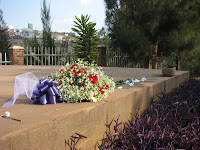
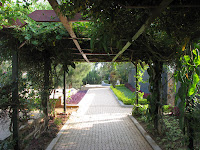 This is also the burial site for over 250,000 victims of the genocide.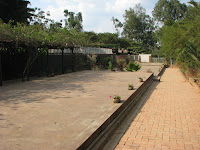
 From there , we drove around many of the neighborhoods in Kigali.